Funky Contact Lenses can turn a familiar outfit into something theatrical, playful, or quietly unexpected. A vivid violet iris, a thin cat-eye pattern, or a soft gray tint can change the mood of a look in seconds. The right pair should feel like part of your style, not the whole story. Small detail. Big effect.
This guide explores ten distinctive options for different tastes, from subtle color enhancements to bold designs for costumes and special events. It considers how each style may appear in daylight, under indoor lighting, and beside different makeup choices. A lens that looks striking in a product photo may feel much louder in person. That difference is worth remembering.
Appearance is only one part of choosing contact lenses. Comfort, clear vision, and a proper fit matter just as much, even for lenses worn mainly for fashion. Decorative lenses still touch the eye, so consult an eye-care professional about fitting and safe wear. Follow the product’s care instructions, and do not share lenses. If your eyes become painful, red, or unusually sensitive to light, remove the lenses and seek professional advice. These steps may sound less exciting than choosing a pattern. They are still part of the look. The best choice is one that suits your style without asking your eyes to pay for it.
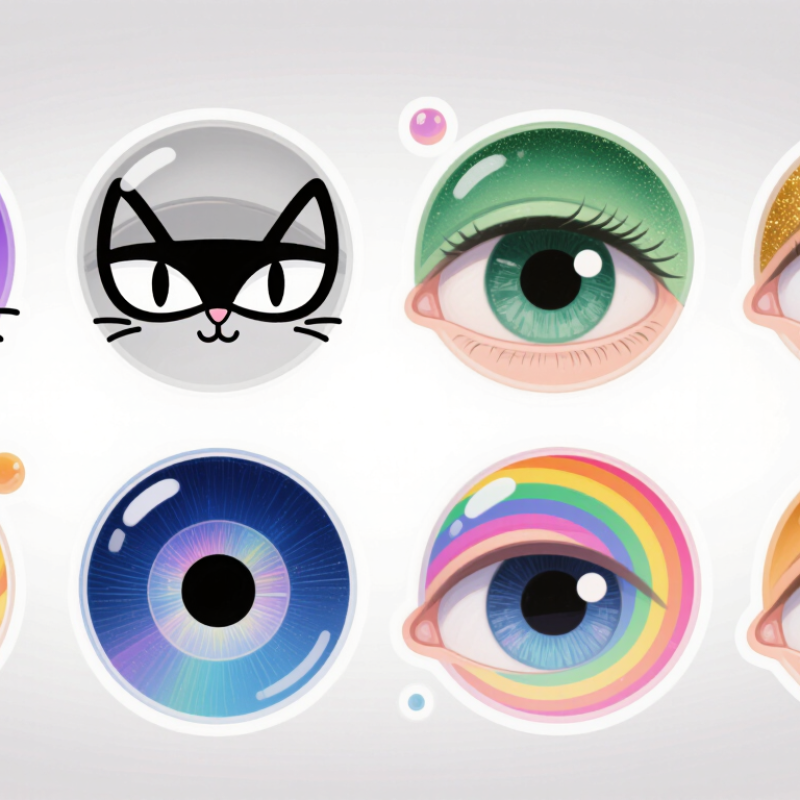
Funky contact lenses can create a dramatic look, from pale, icy irises to bright rings of color. But appearance does not determine safety. In the United States, the FDA regulates decorative contact lenses as medical devices, even when they do not correct vision. They are not ordinary costume accessories. A prescription is required.
An eye-care professional checks your eyes and measures their shape before fitting lenses. That matters because a lens that sits poorly can rub the cornea, blur vision, or trap germs. A quick online quiz cannot replace an eye exam. Nor can a friend’s prescription; lens fit varies from person to person. Small details matter.
Before buying, use a seller that requires a valid prescription, and follow the care instructions from your eye-care professional. Wash and dry your hands before handling lenses. Never share them, even for one evening. Remove them if your eyes become painful, red, or unusually sensitive to light, then contact an eye-care professional promptly. The look may be temporary. Eye irritation can be less predictable. It is easy to focus on the color in a mirror and overlook the fit. I would not treat that as a minor detail.
Funky contact lenses can change a look in seconds, but eye safety matters more than the effect. The CDC estimates that 45 million people in the United States wear contact lenses. That is a lot of eyes depending on small, carefully fitted devices. Decorative lenses need the same thoughtful care as clear ones; appearance alone cannot tell you whether a lens fits properly.
The risk is easy to underestimate. In a CDC report on contact lens wear and care, nearly all surveyed wearers reported at least one habit linked to eye infection risk (MMWR, 2015). Sleeping in lenses, rinsing them with tap water, or reusing old solution can expose eyes to germs. Redness, pain, light sensitivity, or blurry vision deserve prompt attention from an eye-care professional. Don’t wait it out.
Tips: Get a professional fitting before trying decorative lenses, even if they have no vision correction. Wash and dry your hands before handling them. Use fresh contact lens solution, never water or saliva. Follow the wearing schedule, and remove lenses before sleeping unless your eye-care professional specifically approves overnight wear. A lens that feels scratchy is not “just part of the style.” Remove it and ask for advice.
Funky contact lenses can shift a look without hiding every trace of your natural eye color. A soft limbal ring adds definition; honey and warm amber bring a sunlit glow. Muted hazel and gray-green offer quieter changes, while icy blue creates a cooler contrast. These natural enhancers look different in daylight than under warm indoor bulbs. Small detail, big difference.
For more noticeable styles, try a gentle enlarging effect, a starburst pattern, or a marbled iris with fine flecks. Violet adds an unusual but wearable accent. A fractured-crystal design catches attention with layered spokes, while a graphic neon pattern feels suited to costume styling. That makes ten distinct directions, from barely-there color to playful fantasy. Some patterns can look less convincing up close; I would check them in a mirror before choosing an outfit.
Appearance matters, but eye comfort matters more. Decorative lenses still sit on the eye, so ask an eye-care professional about fit and safe wear, even if you do not need vision correction. Follow the care instructions, wash and dry your hands before handling lenses, and never share them. Discomfort, redness, or blurred vision is a reason to remove the lenses and seek professional advice. Style should not sting.
| Lens Style | Visual Effect | Best Suited For | Color Coverage | Wearability Consideration |
|---|---|---|---|---|
| Enhancement Tint | Deepens or brightens the wearer’s natural iris color while keeping its pattern visible. | A subtle everyday change, especially for naturally light-colored eyes. | Translucent; generally makes less difference on dark eyes. | Choose a properly fitted lens; the result depends on the original eye color and lighting. |
| Natural Opaque Color | Creates a more noticeable new eye color while using printed details to suggest a natural iris. | Changing the appearance of light or dark eyes for everyday or occasional styling. | More covering than an enhancement tint. | Color and pupil alignment can look different from person to person; confirm the fit with an eye-care professional. |
| Defined Limbal Ring | Adds a darker outline around the iris for a more defined, high-contrast look. | Portraits, makeup looks, or a noticeable but relatively simple style. | Usually emphasizes the iris edge rather than completely changing its color. | Printed patterns can look less natural at close range; comfort depends on fit and lens material. |
| Circle-Look Design | Uses a prominent outer ring and iris pattern to create the impression of a larger-looking iris. | Stylized beauty looks, fashion photography, or character-inspired makeup. | Varies by design; the effect is primarily visual. | It does not physically enlarge the eye. Avoid wearing any lens that causes irritation or blurred vision. |
| Two-Tone Gradient | Blends two shades across the iris for a soft, layered color effect. | Adding dimension to a simple makeup look or coordinating with an outfit. | Ranges from subtle blending to more noticeable color change. | Printed colors may appear different against different natural eye colors. |
| Violet or Unusual-Hue Design | Introduces a less common eye color, such as violet, teal, or silver-gray. | Fashion styling, themed events, and creative portraits. | Often designed for a clearly visible color change. | Check the lens’s intended use and wear schedule; a dramatic color does not make a lens suitable for extended wear. |
| Cat-Eye or Slit-Pupil Design | Prints a vertical pupil-like motif over the iris for a feline or fantasy effect. | Costumes, cosplay, and short-duration photo looks. | Decorative printed pattern; coverage depends on the specific design. | The printed motif may interfere with vision. Use only as directed and do not drive or do tasks requiring clear vision if sight is affected. |
| White or Pale Fantasy Design | Creates a striking pale, washed-out, or supernatural-looking iris effect. | Horror makeup, stage costumes, and fantasy character styling. | Typically intended to make a strong visual change. | Some designs can obstruct or reduce vision, particularly in dim light; reserve them for settings where safe vision is maintained. |
| Mesh or Patterned Design | Uses a dense printed pattern to create an unusual texture or stylized eye effect. | Creative photography, costumes, and experimental makeup. | Pattern coverage varies and may partially cover the visible iris. | Dense patterns can affect vision. Stop wearing the lenses if vision becomes blurred or uncomfortable. |
| Heterochromia Pair | Uses two different colors—one for each eye—to create an intentionally mismatched look. | Editorial styling, cosplay, and distinctive fashion looks. | Depends on the chosen colors and whether each lens is translucent or opaque. | Each lens must fit the individual eye; do not assume a pair has identical parameters for both eyes. |
Safety note: Decorative contact lenses are medical devices, even when used only for appearance. Obtain a professional eye exam and fitting, follow the prescribed wear and care instructions, and never share lenses. In the United States, decorative contact lenses require a prescription.
Funky lenses look most convincing when their color complements your eyes instead of overpowering them. Check the shade in natural daylight, since indoor bulbs can make colors appear warmer or duller. On dark brown eyes, vivid violet, teal, or amber patterns often create noticeable contrast. Light eyes may suit darker rings or layered colors that add definition. These are starting points, not rules; skin tone, makeup, and personal taste change the effect. Small details matter.
Pattern affects the mood as much as color. Fine flecks can look subtle from a distance, while broad rings or starburst designs feel more theatrical. A dramatic lens may look less polished than expected under office lighting, a mismatch that is easy to overlook in a bright shop. Try comparing the look with your usual clothes and makeup before settling on a style. Cosmetic lenses still need a proper fitting, even when they have no vision correction. Ask an eye-care professional which options are suitable, and follow their cleaning and wear instructions. If your eyes feel irritated, remove the lenses and seek professional advice. Comfort matters more than the perfect photo.
A vivid pattern can change an outfit, but a lens still rests directly on the eye. Even non-corrective decorative lenses need a proper fit. The U.S. Food and Drug Administration classifies decorative contact lenses as medical devices and advises users to obtain professional guidance. An eye-care professional can check how a lens sits, assess eye health, and explain safe wear for your specific lenses. A stylish pair should feel comfortable, not tight, scratchy, or irritating.
Care matters just as much as fit. CDC research published in 2014 found that nearly all surveyed contact-lens wearers reported at least one risky hygiene habit. That finding is a useful reminder: small shortcuts can add up. Wash and dry your hands before handling lenses, use only the recommended solution, and never rinse or store them in tap water. Follow the wearing schedule, and remove lenses if your eyes become red, painful, or unusually sensitive to light. Don’t push through discomfort.
Tips: Ask your eye-care professional to demonstrate insertion and removal before wearing a new pair. Keep your case clean and replace it as directed. If something feels off, take the lenses out and seek professional advice. Eye comfort can be subtle; I’d rather pause than guess.
In the United States, they are regulated as medical devices. A prescription is required. They are not ordinary costume accessories.
An eye-care professional checks your eyes and measures their shape. A poor fit can rub the cornea, blur vision, or trap germs. Small details matter.
No. An online quiz cannot measure lens fit. A friend’s prescription may not suit your eyes. Easy shortcut, poor idea.
Options include soft limbal rings, honey or amber tones, muted hazel, gray-green, and icy blue. Bolder designs include enlarging effects, starbursts, marbled irises, violet accents, fractured-crystal patterns, and graphic neon.
Not always. Natural enhancers can look different in daylight and under warm indoor bulbs. Check the effect in your usual lighting.
Wash and dry your hands before handling them. Follow your eye-care professional’s care instructions. Never share lenses, even for one evening.
Remove the lenses if your eyes hurt, turn red, or become unusually sensitive to light. Contact an eye-care professional promptly. Blurred vision also deserves attention.
No. Some patterns may look less convincing nearby. Check them in a mirror before choosing an outfit. I might trust the mirror too quickly, though; comfort matters more.
Funky Contact Lenses can transform a look, whether you prefer a subtle enhancement or a vivid fantasy-inspired design. This guide explores ten styles, ranging from natural-looking shades and delicate patterns to striking colors and dramatic effects. It also explains how to choose a color and pattern that complement your natural eye color, personal style, and the occasion, so your lenses feel expressive without overwhelming your overall look.
Even non-corrective contact lenses are regulated by the FDA, and decorative lenses still require careful attention to fit and eye health. The CDC estimates that 45 million people in the United States wear contact lenses, making safe habits important for many people. Before choosing a style, consult an eye-care professional for a prescription, proper fitting, and personalized guidance. Follow their instructions for wearing, cleaning, storing, and replacing lenses, and do not share them. With thoughtful selection and responsible care, you can enjoy a distinctive look while prioritizing comfortable, healthy eyes.
