How to Source Safe Halloween Contacts Globally? begins with a simple truth: Halloween Contacts are medical devices, not ordinary costume accessories. Their color and design may attract attention, but poor manufacturing can create serious eye risks. FDA guidance warns that decorative lenses can cause corneal scratches, infections, and impaired vision without proper fitting. The U.S. Centers for Disease Control and Prevention reported that nearly all surveyed contact lens users had practiced at least one risky hygiene behavior. That finding remains relevant during seasonal demand spikes.
Dr. Thomas Steinemann, an ophthalmologist and professor of ophthalmology, has advised, “If you want to wear decorative contact lenses, you should be examined by an eye care professional and get a prescription.” His statement supports a practical sourcing standard. Buyers should verify manufacturer identity, prescription requirements, material specifications, batch records, and local regulatory authorization. The BCLA CLEAR reports also emphasize evidence-based lens safety, professional fitting, and responsible aftercare. These principles should guide international purchasing decisions.
A reliable supplier should provide sealed packaging, traceable lot numbers, clear expiration dates, and multilingual instructions. Product images are not enough. A factory audit, independent quality testing, and documented complaint procedures offer stronger evidence. Regional rules differ, so global sourcing requires country-by-country verification. A product accepted in one market may need different registration elsewhere. That assumption is dangerous.
The uncomfortable part is that low prices can hide missing controls. Even experienced buyers may overlook storage conditions or incomplete labeling. Therefore, this guide treats safety as a supply-chain responsibility, not a seasonal marketing claim. Consumers still need professional eye care before wearing Halloween Contacts. Availability matters, but healthy vision matters more.
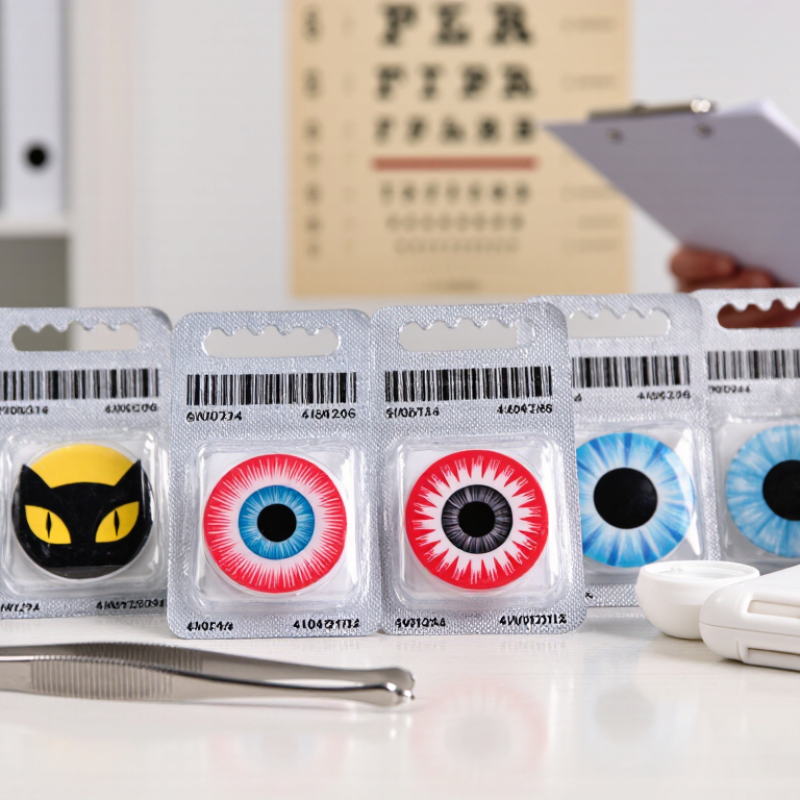
How to Source Safe Halloween Contacts Globally?
Halloween contact lenses can change an appearance within seconds, but the safety risks are easy to underestimate. These lenses sit directly on the cornea, where poor oxygen flow, dust, or bacteria can cause harm. The U.S. Food and Drug Administration warns that incorrectly fitted decorative lenses may lead to corneal scratches, infections, and vision loss. A glossy package can still hide a poor fit.
The data is uncomfortable. A CDC survey published in 2015 found that 99% of contact lens wearers reported at least one hygiene-related risk. In a separate CDC analysis of 1,075 contact-lens-related eye infection reports, nearly one in five cases involved permanent eye damage. These findings should influence global sourcing decisions. Buyers should request prescription-only distribution, sealed packaging, lot numbers, expiry dates, material details, and traceable supplier records. Independent quality documents matter more than attractive product photos.
Fit must be checked by an eye-care professional before purchase. Never share lenses, sleep in them, or rinse them with tap water. Stop immediately if redness, pain, blurred vision, or light sensitivity appears. Seek professional care quickly. I would also question suppliers offering unusual colors without clear documentation; low prices are not proof of safety, and international shipping does not remove responsibility. Safety checks can feel slow. They are still necessary.
A practical global sourcing and safety framework for decorative and non-corrective contact lenses.
| Safety Dimension | Verified Fact | Risk Level | Global Sourcing Requirement | Evidence to Request | Relevant Authority or Standard |
|---|---|---|---|---|---|
| Regulatory status | Decorative, colored, and non-corrective contact lenses can still be medical devices because they are placed directly on the eye. | High | Classify the product according to the destination market before purchase, import, advertising, or distribution. | Regulatory classification, market authorization information, importer details, and destination-country compliance statement. | United States Food and Drug Administration; Health Canada; European Union Medical Device Regulation. |
| Prescription and professional fitting | In the United States, decorative contact lenses are regulated medical devices and require a valid prescription. A prescription is also important for correct fit, even when vision correction is not needed. | High | Do not source products intended for direct consumer sale without confirming the prescription, fitting, and sale requirements in each destination. | Prescription policy, fitting protocol, eye-care professional involvement, and customer eligibility procedure. | United States Food and Drug Administration; national health-care regulations may differ by country. |
| Corneal oxygen supply | A contact lens can reduce oxygen reaching the cornea. Poor oxygen transmission, excessive wear, or an unsuitable fit may contribute to corneal swelling and other complications. | High | Evaluate material, oxygen-transmission data, lens thickness, wearing schedule, and maximum recommended wear time before approval. | Material specification, oxygen permeability or transmissibility data, design specification, and validated wearing instructions. | ISO 18369 series; professional eye-care guidance; product technical documentation. |
| Fit and dimensions | Incorrect base curve, diameter, or optical parameters can cause lens movement, irritation, reduced vision, or damage to the corneal surface. | High | Confirm that the product is available in clearly defined parameters and is not marketed as a universal-fit item. | Base curve, diameter, power range where applicable, design drawings, tolerance limits, and fitting instructions. | ISO 18369 series; licensed eye-care professional assessment. |
| Biocompatibility and materials | Materials, pigments, coatings, preservatives, and residues that are not adequately evaluated may cause irritation, allergy, inflammation, or toxicity. | High | Require documented biocompatibility evaluation and full disclosure of lens materials, colorants, coatings, and processing residues. | Material formulation, pigment safety information, biocompatibility assessment, chemical characterization, and risk-management file. | ISO 10993 series; ISO 14971; applicable medical-device regulations. |
| Sterility and packaging | Contact lenses are commonly supplied in sterile individual packages. A damaged, leaking, opened, or expired package may compromise product safety. | High | Accept only intact, sealed, traceable packaging with a defined shelf life and validated sterilization process. | Sterilization validation, sterility assurance information, package-integrity testing, expiry date, and storage conditions. | ISO 11607; ISO 11135, ISO 11137, or another applicable validated sterilization standard. |
| Labeling and traceability | Users need clear information about material, parameters, expiry, wearing schedule, cleaning, storage, warnings, and the responsible legal entity. | High | Use destination-market language and ensure every unit, carton, and shipment can be traced to a lot or batch. | Approved label artwork, instructions for use, lot or batch number, manufacturing date, expiry date, storage conditions, and contact details. | Applicable destination-country medical-device labeling rules; ISO 15223-1 symbols. |
| Hygiene and handling | Tap water, saliva, shared lenses, and unclean hands can introduce microorganisms. Water exposure is associated with serious eye-infection hazards. | High | Provide handling instructions that prohibit sharing, saliva, tap water, and non-approved cleaning practices. | Validated care instructions, approved disinfecting solution compatibility, hygiene warnings, and consumer-use testing. | United States Centers for Disease Control and Prevention; United States Food and Drug Administration. |
| Wear, sleep, and water exposure | Sleeping in lenses or wearing them while swimming or showering can increase the risk of serious eye infection and corneal complications. | High | Label a conservative wear schedule and clearly warn against sleeping, swimming, showering, or other water exposure unless specifically authorized by an eye-care professional. | Wear-time limits, replacement schedule, water-exposure warnings, and instructions for removal if discomfort occurs. | United States Centers for Disease Control and Prevention; professional eye-care guidance. |
| Adverse-event response | Pain, marked redness, discharge, light sensitivity, swelling, or sudden blurred vision can indicate a serious problem requiring prompt professional evaluation. | High | Establish a documented complaint, escalation, medical referral, product quarantine, and recall process before launch. | Adverse-event procedure, customer-care script, complaint log, escalation time limits, recall plan, and lot-traceability records. | Applicable national vigilance and post-market-surveillance requirements; eye-care emergency guidance. |
| Quality-management system | Consistent manufacturing, change control, complaint handling, and corrective actions are essential for products that contact the eye. | Medium | Prefer audited manufacturing sites with a documented medical-device quality system and controlled production records. | Quality-system certificate where applicable, audit report, process controls, change-control procedure, nonconformance records, and corrective-action history. | ISO 13485; ISO 14971; applicable regulatory quality-system requirements. |
| Supplier verification | Online availability or low price does not demonstrate safety, regulatory compliance, sterility, or correct fitting. | Medium | Complete documentary review, sample inspection, packaging verification, and independent testing before commercial approval. | Legal-entity verification, regulatory documents, technical file index, sample test results, batch records, insurance, and recall capability. | ISO 13485 supplier-control principles; destination-market regulatory requirements. |
| Consumer communication | Marketing that presents lenses as harmless accessories or encourages prolonged wear can lead to unsafe behavior. | Medium | Review all product pages, packaging, advertisements, and influencer content for accurate medical-device and safety claims. | Approved claims matrix, advertising review record, risk warnings, fitting instructions, and prohibited-claims checklist. | Applicable advertising, consumer-protection, and medical-device communication rules. |
Check the seller’s business address, registration details, and customer support channels. Ask for material, diameter, water content, base curve, and prescription information. Clear answers matter.
Ask whether the lenses are registered or authorized for sale locally. Rules differ between countries and regions. Foreign documents may not be enough. Confirm requirements with a qualified local eye-care professional.
Request sterility records, biocompatibility testing, dimensional checks, and oxygen-transmission data. A certificate should match the exact lot, material, diameter, and base curve. A generic certificate proves little.
Look for sealed blister packs, readable instructions, storage guidance, expiry dates, and lot numbers. Packaging should identify the manufacturer or importer. Do not trust photographs alone. Inspect the seals physically.
Treat phrases like “one size fits everyone” as warning signs. No lens is automatically safe for every eye. Be cautious when sellers avoid questions about fitting, irritation, or returns.
Professional fitting may be required, depending on local rules and your eyes. Decorative lenses can cause injury when poorly fitted or misused. Do not share lenses or sleep while wearing them.
Choose traceable shipping with clear procedures for damaged packages. Keep delivery records and photographs of broken seals. Ask how complaints are handled before ordering. Details can prevent confusion.
No. Audits can miss seasonal production problems or batch changes. Recheck important batches before demand increases. I could still overlook something, especially across language barriers. Pause when basic answers are refused.
Sourcing safe Halloween Contacts globally requires more than choosing an attractive color or design. Before purchasing, understand the potential risks of decorative lenses, including eye irritation, infection, reduced oxygen flow, and vision problems when products are poorly fitted or improperly maintained. Check the medical and legal requirements in the destination country, and consult a qualified eye-care professional to determine whether lenses are suitable and to obtain the correct fit. Only purchase from reputable suppliers or licensed sellers that provide clear product information, customer support, and evidence of responsible manufacturing.
Before accepting an order, verify the packaging, labeling, expiration date, care instructions, and relevant regulatory documentation. Avoid products with damaged packaging, unclear origins, missing specifications, or unrealistic claims. Choose lenses that match your prescription and fitting requirements, follow hygiene and storage instructions carefully, and never share or sleep in them unless specifically advised by a professional. Stop using them and seek medical help if discomfort, redness, pain, or blurred vision occurs.

 Chic Contacts